



What does it mean if hair doesn't fall out after laser treatment?
2026-02-13 15:30
In the field of modern beauty and skin management, laser hair removal has become a highly effective, long-lasting, and safe method for removing unwanted hair. Laser hair removal machines are increasingly common in medical aesthetic institutions, beauty salons, and personal home beauty devices.
However, some people have questions after laser hair removal treatment—why didn't their hair (or body hair) fall out?
Does this mean the treatment was ineffective? Or has the hair not yet entered the appropriate shedding phase?
This article will systematically analyze this from multiple perspectives, including the hair growth cycle, the mechanism of laser action, laser machine parameter settings, and differences in skin type and hair characteristics, to help you fully understand: what does it really mean when hair doesn't fall out after laser treatment?
Laser Hair Removal: "Why Hair Should Fall Out"
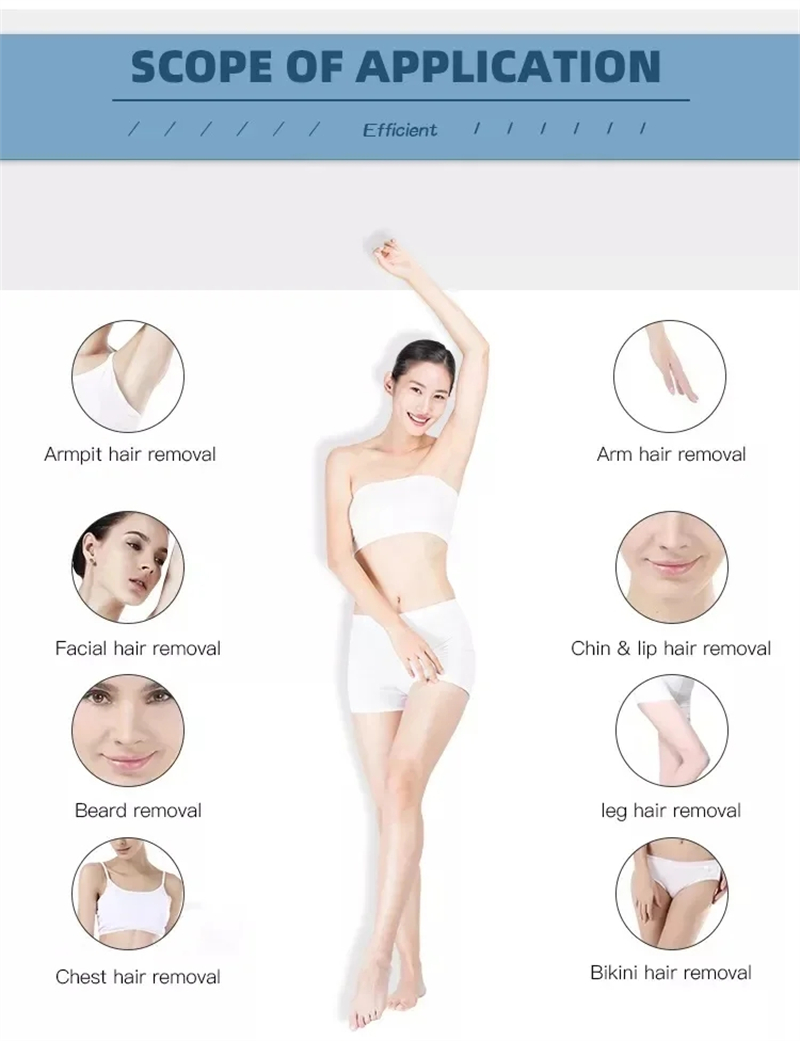
The core mechanism of laser hair removal is "Selective Photothermolysis." When a laser beam emitted by a laser hair removal machine shines on the skin, the light energy is absorbed by the melanin in the hair follicle and converted into heat energy, thus destroying the hair follicle's growth function and preventing new hair from regrowing.
However, this destructive effect is only effective on hair in the anagen phase. Since human hair goes through three different phases—anagen, catagen, and telogen—each laser hair removal session only targets a portion of the active hair follicles. This is why, even with a high-performance laser hair removal machine, multiple treatments are needed to achieve the desired permanent hair removal effect.
What if hair doesn't fall out after laser hair removal?
Many people mistakenly believe that the treatment has failed when hair doesn't fall out immediately after laser hair removal. However, this is not the case. The lack of hair falling out after laser treatment can usually be understood from the following perspectives:
1. The hair may not have entered the shedding phase yet
Laser hair removal does not immediately "burn" the hair; instead, it gradually destroys the hair follicle structure.
Within 1 to 3 weeks after treatment, damaged hair follicles will stop growing, and the hair shaft will gradually be expelled from the skin. If hair is still present in the first few days after treatment, this is a normal physiological reaction and does not mean the laser hair removal machine was ineffective.
2. Treatment may not cover all hair in the growth phase
Due to different hair growth cycles, some hair follicles may be in the resting or regression phase. These follicles may not have absorbed enough laser energy during the initial treatment and therefore continue to grow. This necessitates multiple laser hair removal sessions to cover different stages of hair growth and achieve overall hair removal results.
3. Insufficient laser hair removal machine energy setting
The effectiveness of laser hair removal is closely related to laser energy. If the energy setting is too low during treatment, the photothermal effect cannot effectively penetrate to the deep layers of the hair follicle, resulting in "unremoved hair."
In professional medical aesthetic institutions, operators will adjust the laser hair removal machine parameters based on skin tone, hair thickness, and treatment area to ensure both safety and efficiency. However, home-use laser hair removal machines typically use lower energy levels, so the hair removal effect may take longer to appear.
4. Poor Match Between Hair Color and Skin Tone
The effectiveness of laser hair removal machines depends on the "color difference" between the hair and skin.
If the hair color is light (such as blonde, gray, or white), the melanin content is low, and the laser energy is difficult to absorb, thus failing to effectively destroy the hair follicle, resulting in the hair not falling out.
Similarly, people with darker skin tones, due to higher melanin levels, may also have some of the laser energy "dispersed," reducing treatment efficiency.
Does the lack of hair removal after laser hair removal mean the treatment has failed?
This situation cannot be directly judged as "treatment failure." In fact, the delayed hair removal is simply a matter of time and reaction.
According to dermatological studies, hair typically falls out gradually over 7 to 21 days after laser hair removal, sometimes even longer. This process is particularly slow when using a low-power home laser hair removal machine.
If there is still no significant change in hair after three weeks, the following situations may be involved:
• Insufficient device energy or wavelength mismatch (e.g., home laser hair removal machines typically have an energy limit of 10-15 J/cm²);
• Improper operation (not adhering to the skin, incorrect irradiation angle, excessive spacing, etc.);
• Treatment intervals that are too short or too long, resulting in insufficient coverage of the hair growth phase;
• Inadequate skin protection measures, such as post-treatment sun exposure or frequent friction, affecting hair follicle recovery and natural hair loss.
Why are the parameter settings of laser hair removal machines so critical?
The effectiveness of laser hair removal largely depends on the performance of the device and energy control.
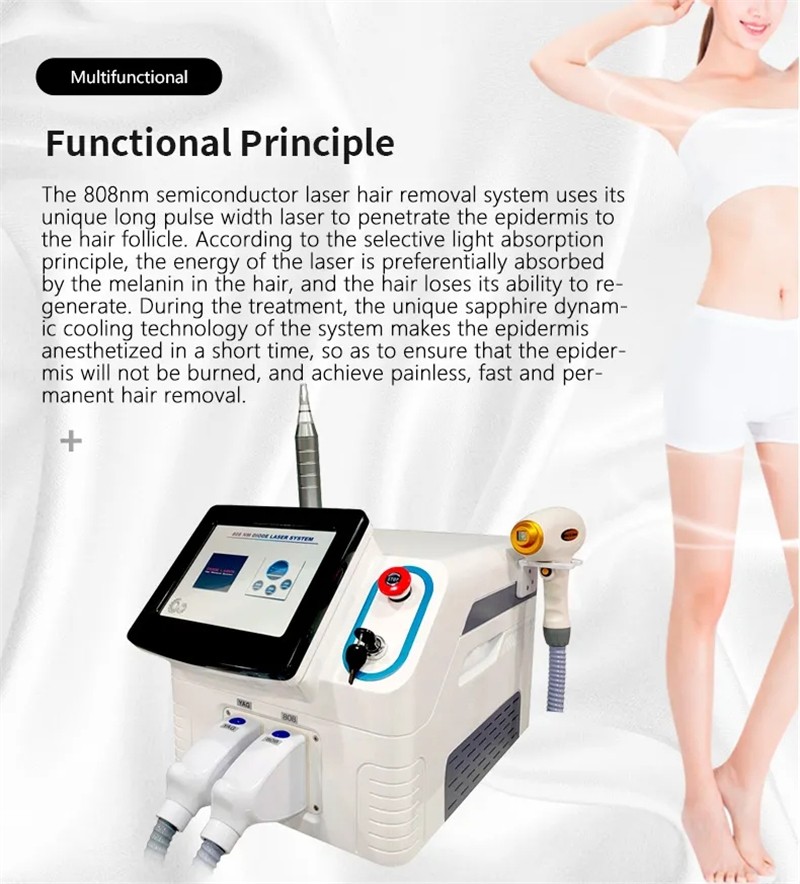
Professional medical-grade laser hair removal machines (such as those using 755nm Alexander Laser, 808nm semiconductor laser, 1064nm Nd:YAG laser, etc.) can precisely set parameters according to different skin types, while home devices, due to safety limitations, have limited energy output, resulting in longer treatment cycles and slower hair removal.
Key parameters for laser hair removal include:
• Fluence: Determines whether the photothermal effect is sufficient to destroy the hair follicle;
• Pulse Duration: Affects the residence of heat within the hair follicle;
• Wavelength: Determines penetration depth and selectivity;
• Repetition Rate: Affects treatment efficiency and comfort.
If these parameters are mismatched, even high-end laser hair removal machines may result in no hair removal or only partial hair removal.
Is the hair "still there" after laser hair removal, but actually "dead"?
A frequently overlooked fact is:
The hair remaining on the skin surface after treatment does not mean the hair follicle is still active.
Many times, the hair follicle has been destroyed by the heat energy, but the hair shaft has simply not yet been naturally expelled. If you gently pull the hair at this time, you will find that some hairs can be easily removed, or they will naturally fall out a few days later when showering or rubbing.
Therefore, seeing hair still present after laser hair removal does not indicate failure, but rather a natural process of gradual hair removal.
Why didn't my hair come out after laser hair removal? Is it because the equipment is faulty?
Not necessarily. Even with a top-of-the-line laser hair removal machine, multiple treatments are needed to see completely smooth results. The key is to observe the hair growth over the next 2-3 weeks.
Can I pluck out any remaining hair?
It's not recommended. Skin is more sensitive after laser treatment, and forcibly plucking may cause folliculitis or inflammatory pigmentation. Let the hair fall out naturally.
How long should the interval be between treatments?
It's generally recommended to have 4-6 weeks between treatments to allow more hair in the growth phase to be covered. If the interval is too short, some hair follicles may not have entered the growth phase, affecting the effectiveness of the hair removal machine.
Is laser hair removal effective for all skin types?
Different wavelengths are suitable for different skin types:
• 755nm Alexander Laser: Suitable for fair skin and dark hair;
• 808nm Semiconductor Laser: Widely applicable;
• 1064nm Nd:YAG Laser: Suitable for darker skin tones.
Choosing the right wavelength for your laser hair removal machine can help improve hair removal efficiency.
How to tell if laser hair removal is truly working?
The following signs usually indicate that the treatment is effective:
• Mild redness or a slight warming sensation on the skin within days after treatment;
• A significant slowdown in hair growth;
• Hair becoming thinner and sparser;
• Hair "falling out on its own" after several weeks;
• Subsequent regrowth of hair being lighter in color and less dense.
If none of the above reactions occur, it is recommended to consult a professional doctor to re-evaluate the laser hair removal machine settings or treatment plan.
How to improve the hair removal effect of your laser hair removal machine?
To avoid ineffective or non-removing of hair, please refer to the following optimization suggestions:
• Choose professional equipment and institutions: Medical-grade laser hair removal machines offer more stable energy output and more significant results;
• Shave before the procedure: Ensures laser energy reaches the hair follicle root;
• Avoid sun exposure and whitening products: To prevent skin melanin from affecting laser absorption;
• Adhere to the treatment schedule: Follow the recommended treatment intervals;
• Post-treatment moisturizing and sun protection: Promotes skin repair and reduces side effects.
The Real Meaning of Hair Not Falling Out After Laser Hair Removal
The fact that hair does not fall out immediately after laser treatment does not mean it is ineffective. This often means:
• The hair has not yet been naturally expelled;
• Some hair follicles are still in the non-growth phase;
• The laser hair removal machine's energy setting is too low or poorly matched.
If the hair gradually becomes thinner, sparser, or even falls out on its own in the following weeks, it indicates that the laser has effectively destroyed the hair follicle. True failure usually manifests as no change in hair growth rate or no significant improvement after multiple treatments.
How competitive are KuoHai beauty machine prices?
By operating as a direct manufacturer in China, KuoHai offers highly competitive pricing for beauty machines and home appliances. Customers can buy EMS body sculpting devices, laser hair removal machines, and ultrasonic cavitation equipment at factory prices without middlemen. We also provide discount programs, seasonal promotions, and bulk purchasing benefits. Our pricing strategy allows buyers to maximize profits while maintaining high-quality standards.
Related News
More >-
![Do electronic muscle stimulators actually work?]()
Do electronic muscle stimulators actually work?
EMS devices work by sending electrical impulses through the skin, offering benefits such as helping to repair tissue and strengthen muscles. Most EMS muscle tone users notice decreased muscle fatigue during daily activities after 2–3 weeks. Visible muscle definition improvements typically appear after 6–8 weeks of consistent EMS muscle tone use.
-
![Is Hydrodermabrasion Suitable for Oily Skin?]()
Is Hydrodermabrasion Suitable for Oily Skin?
Very suitable, but it must be done correctly and gently, with the intensity adjusted according to skin tolerance. Since oily skin is often accompanied by acne scars and minor acne marks, the hydrodermabrasion facial machine can also help: • Reduce minor acne scars • Reduce fine lines • Improve dull skin tone
-
![Does Cryolipolysis Increase Bowel Movements?]()
Does Cryolipolysis Increase Bowel Movements?
During cryolipolysis, a cryolipolysis slimming machine is used to cool fat cells to near freezing point, causing excessive fat cells to undergo irreversible apoptosis. The apoptotic fat cells are then naturally transported and broken down by the body through the lymphatic system and ultimately eliminated through metabolism.
-
![What are the Pros and Cons of a vacuum butt lift machine?]()
What are the Pros and Cons of a vacuum butt lift machine?
Main Advantages • Non-invasive, high safety • Simple operation, no recovery period • Improves local circulation • Enhances buttock fullness etc. Main Disadvantages • Effects are not long-lasting, requiring multiple treatments • Cannot change bone or muscle structure • May cause minor bruising etc.
-
![Does Hydrodermabrasion Require Needles?]()
Does Hydrodermabrasion Require Needles?
Hydrodermabrasion does not require needles at all. Modern hydrodermabrasion uses a combination of professional tools, water, and serum, paired with an advanced hydrodermabrasion facial machine. The entire treatment is completed through water rinsing, negative pressure suction, and simultaneous infusion of repairing ingredients.
-
![How Long Should the Interval Be Between Hydrodermabrasion Treatments?]()
How Long Should the Interval Be Between Hydrodermabrasion Treatments?
The professional recommendation of 3-4 weeks is because: The skin's natural renewal cycle is approximately 28 days. Hydrating facials use a hydrodermabrasion facial machine to remove dead skin cells, so the skin must have sufficient time to regenerate a new stratum corneum before the next treatment.
-
![What happens if you don't exfoliate after laser hair removal?]()
What happens if you don't exfoliate after laser hair removal?
If you don't exfoliate after laser hair removal, dead skin cells will accumulate in the treated area, hindering hair removal and potentially even affecting skin health.
-
![How to Prepare for Hydrodermabrasion?]()
How to Prepare for Hydrodermabrasion?
• Stop using acid-based products and strong skincare products 3–5 days in advance • On the day of your treatment, keep your skin gently clean and without makeup • Avoid sun exposure and prolonged exposure to high temperatures • Sensitive skin requires extra caution • The more stable your skin is before the treatment, the better the hydrodermabrasion facial machine will perform.
Get the latest price? We'll respond as soon as possible(within 12 hours)