



How Many Treatments Are Required for Laser Hair Removal?
2026-02-09 15:30
In the modern medical aesthetics and personal care field, laser hair removal machines have become one of the most popular permanent hair removal methods.
Many people, when first learning about laser hair removal, ask the same question: "How many treatments are needed for complete laser hair removal?"
In fact, laser hair removal is not a process that permanently removes body hair in one session. It involves multiple factors, including the hair growth cycle, skin characteristics, energy parameters, and the type of equipment.
This article will systematically analyze this question from the perspectives of hair physiology, the principle of laser action, the logic of treatment frequency, and influencing factors, helping you understand why multiple treatments are needed and how to determine if the laser hair removal machine is effective.
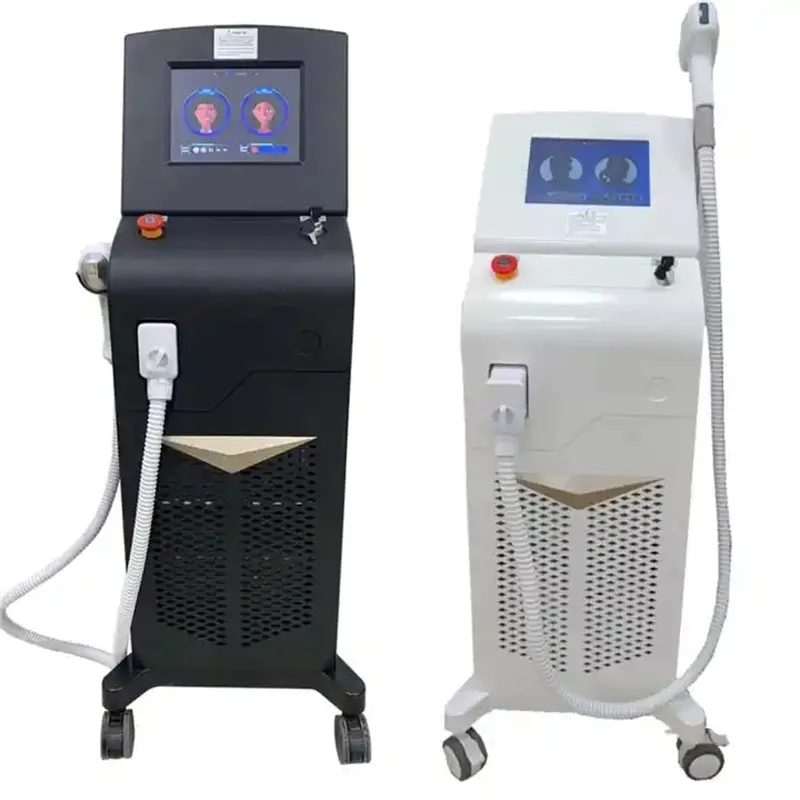
What is the working principle of a laser hair removal machine?
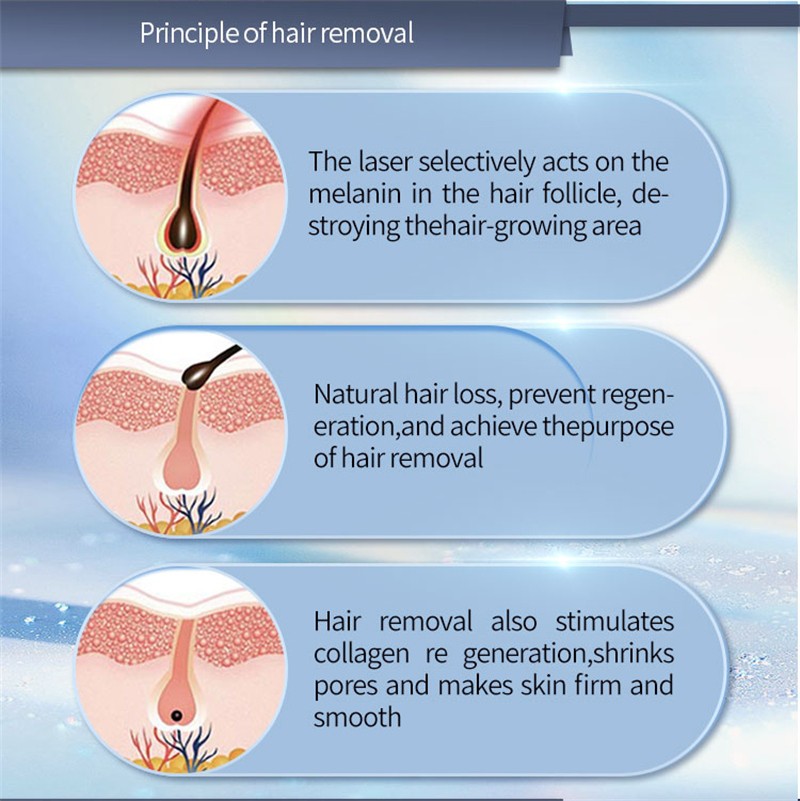
Laser hair removal machines are designed based on the principle of "selective photothermolysis."
The core principle is as follows:
• The laser emits a beam of light with a specific wavelength;
• The light energy is selectively absorbed by the melanin in the hair follicle;
• After absorption, it is converted into heat energy, causing the temperature of the hair follicle to rise rapidly to around 70°C;
• Without damaging the surrounding skin, it destroys the hair follicle stem cells, rendering them unable to regenerate.
Different wavelengths of laser are suitable for different skin tones and hair types:
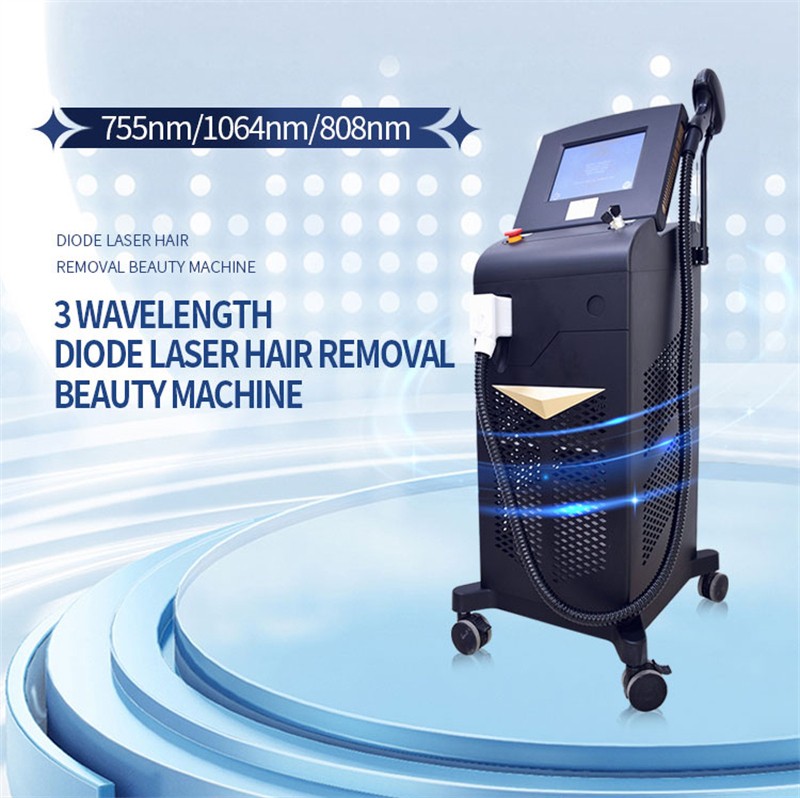
• 755nm Alexandrite laser: Suitable for people with lighter skin and finer hair;
• 808nm Diode laser: Suitable for most skin types;
• 1064nm Nd:YAG laser: More suitable for people with darker skin or sensitive skin.
Therefore, the effectiveness of laser hair removal machines depends on the precise interaction between light energy and the melanin in the hair follicle, and this process must occur when the hair is in the appropriate growth stage.
Why does laser hair removal require multiple treatments?
Many people mistakenly believe that laser hair removal only requires one treatment to permanently remove hair, but this is not the case.
To understand this, it's essential to understand the hair growth cycle.
Hair grows in the human body in a continuous cycle, primarily through three phases:
• Anagen Phase: The hair follicle and hair shaft are tightly connected, rich in melanin, making it the ideal phase for laser treatment.
• Catagen Phase: Hair growth stops, and the hair follicle shrinks.
• Telogen Phase: The hair falls out, and a new hair follicle prepares to grow.
In the same area, only about 20%–30% of the hair is in the anagen phase, and laser hair removal machines can only effectively target follicles in this phase.
This means that each treatment only destroys a portion of the hair follicles; the remaining telogen follicles need to wait until they enter the anagen phase before the next treatment.
Therefore, to achieve near-permanent results, multiple laser treatments are usually required to ensure all hair follicles are effectively treated at different stages.
How many laser hair removal treatments are typically needed?
The number of laser hair removal treatments is not fixed but is influenced by various factors.
However, according to clinical data from professional medical aesthetic institutions and equipment manufacturers, the general rule is as follows:
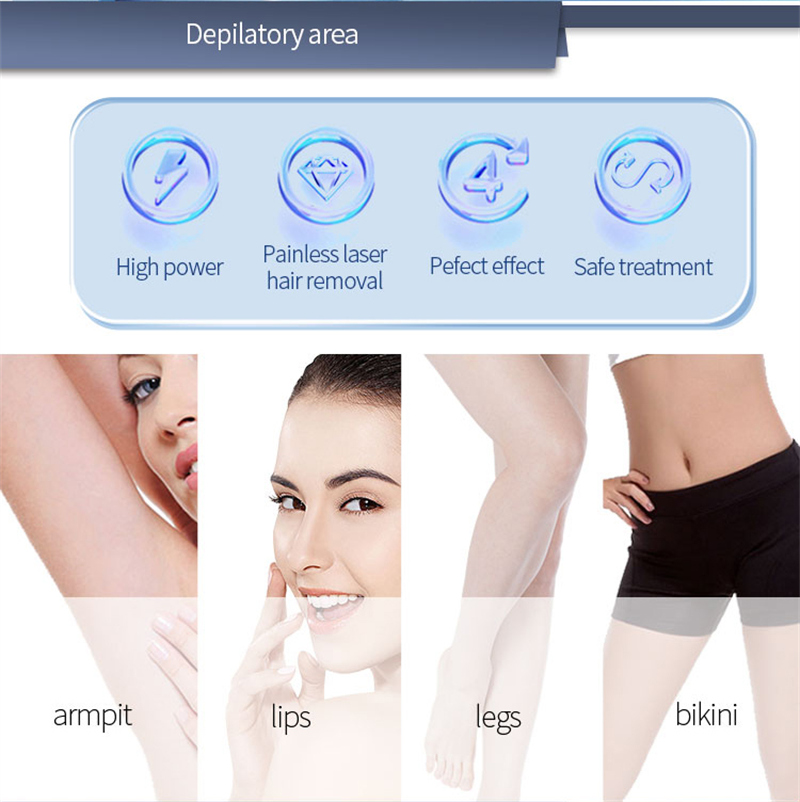
Treatment areas: | Recommended number of treatments: | Treatment Intervals: |
| Face (lip hair, chin) | 6-8 times | Every 4 weeks |
| Underarms | 5-6 times | Every 6-8 weeks |
| Arms, legs | 6-8 times | Every 8-10 weeks |
| Bikini line | 6-10 times | Every 6-8 weeks |
| Back, chest, and abdomen | 8-10 times | Every 10-12 weeks |
Therefore, the optimal number of laser hair removal machine treatments is usually 5 to 10 sessions, depending on hair density, color, thickness, and individual metabolic status.
After completing the entire treatment course, the number of hairs can be reduced by 80% to 90%, with the remaining hairs typically being finer and lighter in color, almost visually inconspicuous.
Why do some people need more laser hair removal sessions?
While most people achieve noticeable results after 6 to 8 treatments, individual differences exist. The following factors affect the total number of treatments:
1. Differences in hair color and thickness
Laser hair removal machines work by absorbing light energy through melanin; therefore:
• Darker hair with higher melanin content absorbs energy more fully, resulting in better results;
• Blonde, gray, or white hair contains almost no melanin, making it difficult for the laser to detect.
Therefore, people with lighter-colored hair often require more treatments to achieve satisfactory results.
2. Differences in Treatment Areas
The growth rate and number of hair follicles vary significantly across different areas.
For example, facial and underarm hair has a shorter growth cycle, while leg and back hair has a longer cycle. This determines the differences in treatment intervals and the number of treatment sessions required.
Laser hair removal machines require adjustments to energy and frequency based on the treatment area to precisely target the hair follicles at the appropriate time.
3. Individual Hormone Levels Affect Hair Growth
Individuals with high hormone levels (such as those with high androgen levels) have more active hair follicles, which easily stimulates new hair growth.
Therefore, even with a high-powered laser hair removal machine, more treatment sessions may be needed to maintain the effect.
This is especially true for women during puberty or postpartum, when hormonal fluctuations are significant, leading to more noticeable hair growth.
4. Differences in Laser Hair Removal Machine Types and Energy Settings
Different models of laser hair removal machines differ in energy density, pulse width, and wavelength precision.
High-end equipment can deliver higher energy while ensuring safety, thus reducing the number of treatment sessions.
Low-power or non-medical-grade equipment may require more treatments to achieve the same effect.
For example:
• A medical-grade 808nm semiconductor laser hair removal machine is suitable for large-area hair removal, reaching deep into the hair follicle root;
• A 755nm Alexander Graviton laser hair removal machine is more effective for superficial hair;
• IPL (Intense Pulsed Light) hair removal devices, although optical hair removal machines, have lower energy concentration, usually requiring more treatment sessions.
How long should the interval be between laser hair removal machine treatments?
Many people wonder when using laser hair removal machines: "How often should I do it?"
The answer depends on the hair growth cycle of the target area. Too short an interval won't cover the newly formed hair follicles, while too long an interval is a waste of time.
Professional recommendations are as follows:
• Facial hair: approximately 4 weeks;
• Underarms and bikini line: 6-8 weeks;
• Limbs and torso: 8-10 weeks.
A reasonable treatment interval ensures that the laser hair removal machine targets as many active hair follicles as possible, thus improving overall efficiency.
How to determine if a laser hair removal machine treatment is effective?
Assessing the effectiveness of laser hair removal cannot be based solely on changes after a single treatment. Observe improvements in multiple dimensions:
• Slower hair growth rate: Hair grows more slowly after each treatment;
• Thinner and softer hair: Hair shaft diameter decreases, and color lightens;
• Increased hair removal interval: Significantly fewer hairs grow back after each treatment interval;
• Improved skin smoothness: Skin texture improves after pores shrink and hair quantity decreases.
If no significant changes are seen after several consecutive treatments, it may be due to insufficient laser energy, wavelength mismatch, or limited equipment performance. Parameters should be adjusted, or a more efficient laser hair removal machine should be used.
What are the precautions between laser hair removal treatments?
To ensure maximum effectiveness with each laser hair removal machine treatment, please follow these precautions:
1. Avoid sun exposure before treatment
Tanned skin contains more melanin, which is more easily absorbed by the epidermis, increasing the risk of burns. Avoid direct sunlight for at least two weeks before treatment.
2. Do not pluck or wax hair before treatment
Plucking hair removes the hair follicle along with the hair, leaving the laser without a target. Keep the hair root intact; only shave to preserve the follicle.
3. Keep skin clean and moisturized after treatment
The skin barrier is temporarily damaged after laser treatment. Avoid washing with hot water or using skincare products containing alcohol. It is recommended to use a gentle moisturizing lotion.
4. Avoid overly frequent use of the laser hair removal machine
Insufficiently frequent use is not only ineffective but may also irritate the skin, causing erythema or pigmentation. Strictly adhere to the professionally recommended treatment schedule.
Can laser hair removal machines achieve permanent hair removal?
From a medical perspective, laser hair removal machines can achieve long-term inhibition of hair growth, but "permanent hair removal" does not mean that hair will never regrow.
Some incompletely destroyed hair follicles may slightly recover after several months or years, but the hair is usually sparse, fine, and inconspicuous.
Therefore, professional clinics often refer to laser hair removal as "Permanent Hair Reduction," not "Permanent Hair Removal."
To maintain smooth hair in the long term, it is generally recommended to:
• Have a maintenance treatment every 6-12 months after completing the main treatment;
• Use a healthy skin care routine and sun protection measures.
How many laser hair removal treatments are needed?
The number of laser hair removal machine treatments required is influenced by multiple factors, but can be summarized as follows:
Laser hair removal machines target hair follicles in the growth phase, therefore multiple treatments are needed to cover different growth stages;
• Generally, 5-10 treatments are required to achieve the desired effect;
• Treatment intervals should be set at 4-10 weeks depending on the area;
• Hair color, thickness, skin type, hormone levels, and equipment performance all affect the treatment duration;
• After completing the main treatment course, a small number of maintenance treatments can be performed annually to maintain the results.
By choosing a suitable laser hair removal machine, controlling the treatment frequency appropriately, and following scientific aftercare methods, safe, stable, and long-lasting hair removal results can be achieved.
What is KuoHai’s experience with cryolipolysis fat freezing machines?
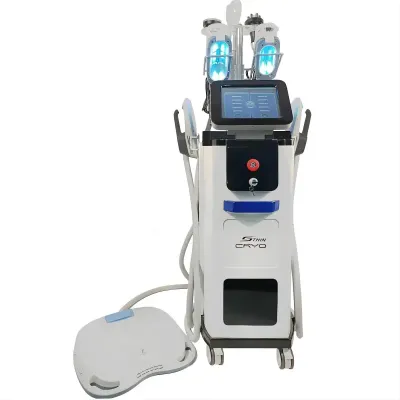
Since 2019, KuoHai has developed and supplied cryolipolysis fat freezing machines for professional beauty salons and personal care markets. These machines are designed to safely target fat cells through controlled cooling technology. As a China manufacturer, we offer high-quality fat freezing machines with factory pricing, wholesale supply, and customized configurations.
Global buyers trust our company for reliable performance, competitive quotes, and efficient production capacity.
Related News
More >-
![Do electronic muscle stimulators actually work?]()
Do electronic muscle stimulators actually work?
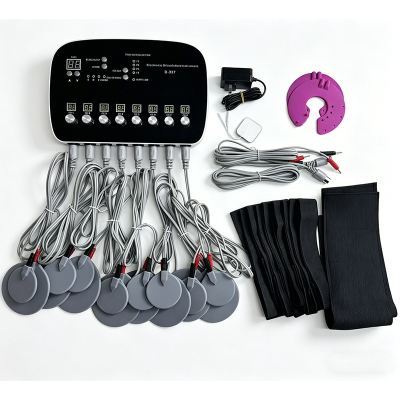
EMS devices work by sending electrical impulses through the skin, offering benefits such as helping to repair tissue and strengthen muscles. Most EMS muscle tone users notice decreased muscle fatigue during daily activities after 2–3 weeks. Visible muscle definition improvements typically appear after 6–8 weeks of consistent EMS muscle tone use.
-
![Is Hydrodermabrasion Suitable for Oily Skin?]()
Is Hydrodermabrasion Suitable for Oily Skin?
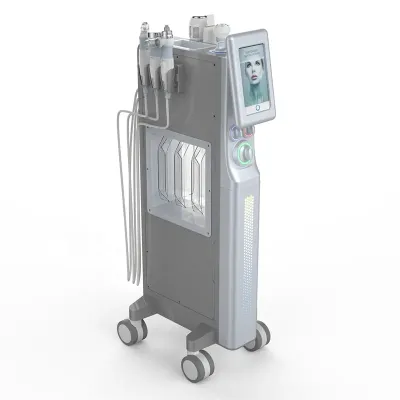
Very suitable, but it must be done correctly and gently, with the intensity adjusted according to skin tolerance. Since oily skin is often accompanied by acne scars and minor acne marks, the hydrodermabrasion facial machine can also help: • Reduce minor acne scars • Reduce fine lines • Improve dull skin tone
-
![Does Cryolipolysis Increase Bowel Movements?]()
Does Cryolipolysis Increase Bowel Movements?
During cryolipolysis, a cryolipolysis slimming machine is used to cool fat cells to near freezing point, causing excessive fat cells to undergo irreversible apoptosis. The apoptotic fat cells are then naturally transported and broken down by the body through the lymphatic system and ultimately eliminated through metabolism.
-
![What are the Pros and Cons of a vacuum butt lift machine?]()
What are the Pros and Cons of a vacuum butt lift machine?
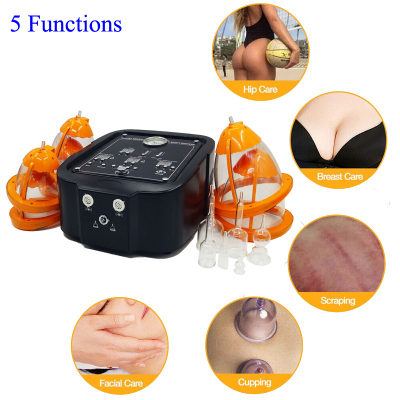
Main Advantages • Non-invasive, high safety • Simple operation, no recovery period • Improves local circulation • Enhances buttock fullness etc. Main Disadvantages • Effects are not long-lasting, requiring multiple treatments • Cannot change bone or muscle structure • May cause minor bruising etc.
-
![Does Hydrodermabrasion Require Needles?]()
Does Hydrodermabrasion Require Needles?
Hydrodermabrasion does not require needles at all. Modern hydrodermabrasion uses a combination of professional tools, water, and serum, paired with an advanced hydrodermabrasion facial machine. The entire treatment is completed through water rinsing, negative pressure suction, and simultaneous infusion of repairing ingredients.
-
![How Long Should the Interval Be Between Hydrodermabrasion Treatments?]()
How Long Should the Interval Be Between Hydrodermabrasion Treatments?
The professional recommendation of 3-4 weeks is because: The skin's natural renewal cycle is approximately 28 days. Hydrating facials use a hydrodermabrasion facial machine to remove dead skin cells, so the skin must have sufficient time to regenerate a new stratum corneum before the next treatment.
-
![What happens if you don't exfoliate after laser hair removal?]()
What happens if you don't exfoliate after laser hair removal?
If you don't exfoliate after laser hair removal, dead skin cells will accumulate in the treated area, hindering hair removal and potentially even affecting skin health.
-
![How to Prepare for Hydrodermabrasion?]()
How to Prepare for Hydrodermabrasion?
• Stop using acid-based products and strong skincare products 3–5 days in advance • On the day of your treatment, keep your skin gently clean and without makeup • Avoid sun exposure and prolonged exposure to high temperatures • Sensitive skin requires extra caution • The more stable your skin is before the treatment, the better the hydrodermabrasion facial machine will perform.
Get the latest price? We'll respond as soon as possible(within 12 hours)